Pet Products Distributor

The Customer
The customer was a pet products distributor with more than 25 years of experience serving brick-and-mortar retailers in Southern California. The company carried more than 10,000 pet supply SKUs across a wide range of categories, including food, treats, toys, grooming items, accessories, and everyday pet care products.
The business had built its operations around wholesale distribution. Its team understood vendor relationships, pricing, purchasing, warehouse operations, and fulfillment for retail customers. However, the company had not built its catalog, systems, or internal process around direct online sales.
In 2021, the distributor approached Acenda to help develop an online marketplace strategy. The goal was to use its product selection, supplier relationships, and cost position to reach shoppers through marketplaces such as Target+, Amazon, and Walmart.
The opportunity was clear, but the work required more than opening new seller accounts. The client needed to prepare its product catalog for digital channels, connect inventory and order systems, meet marketplace requirements, and build a process that could support both wholesale and direct-to-consumer sales.
The Issues
The client was new to eCommerce and had not designed its catalog for marketplace selling. Much of the product information came from vendors and was built for internal purchasing, warehouse operations, or business-to-business sales. That data was not ready to publish directly to consumer-facing marketplaces.
Marketplace product listings require more than basic item information. Each channel has its own rules for titles, descriptions, images, category mapping, variation structure, dimensions, shipping fields, compliance information, and product attributes. A listing that works on one marketplace may need different fields or formatting to work on another.
During the catalog review, Acenda found gaps between the product data the client had and the product data required by marketplaces such as Target+, Amazon, and Walmart. Some items were missing required attributes. Some had inconsistent naming. Some products needed better descriptions, clearer category placement, or normalized variation data.
The client also needed a better way to manage marketplace errors. When product data is incomplete or does not match marketplace rules, listings can be rejected or delayed. For a catalog with more than 10,000 SKUs, reviewing these issues manually can slow down launch and create ongoing operational work.
Inventory and order management also needed attention. The client had existing systems that supported its wholesale business, but those systems were not designed to handle marketplace orders across multiple channels. The company needed a way to connect order flow, inventory updates, shipment tracking, and product data without rebuilding its entire back office.
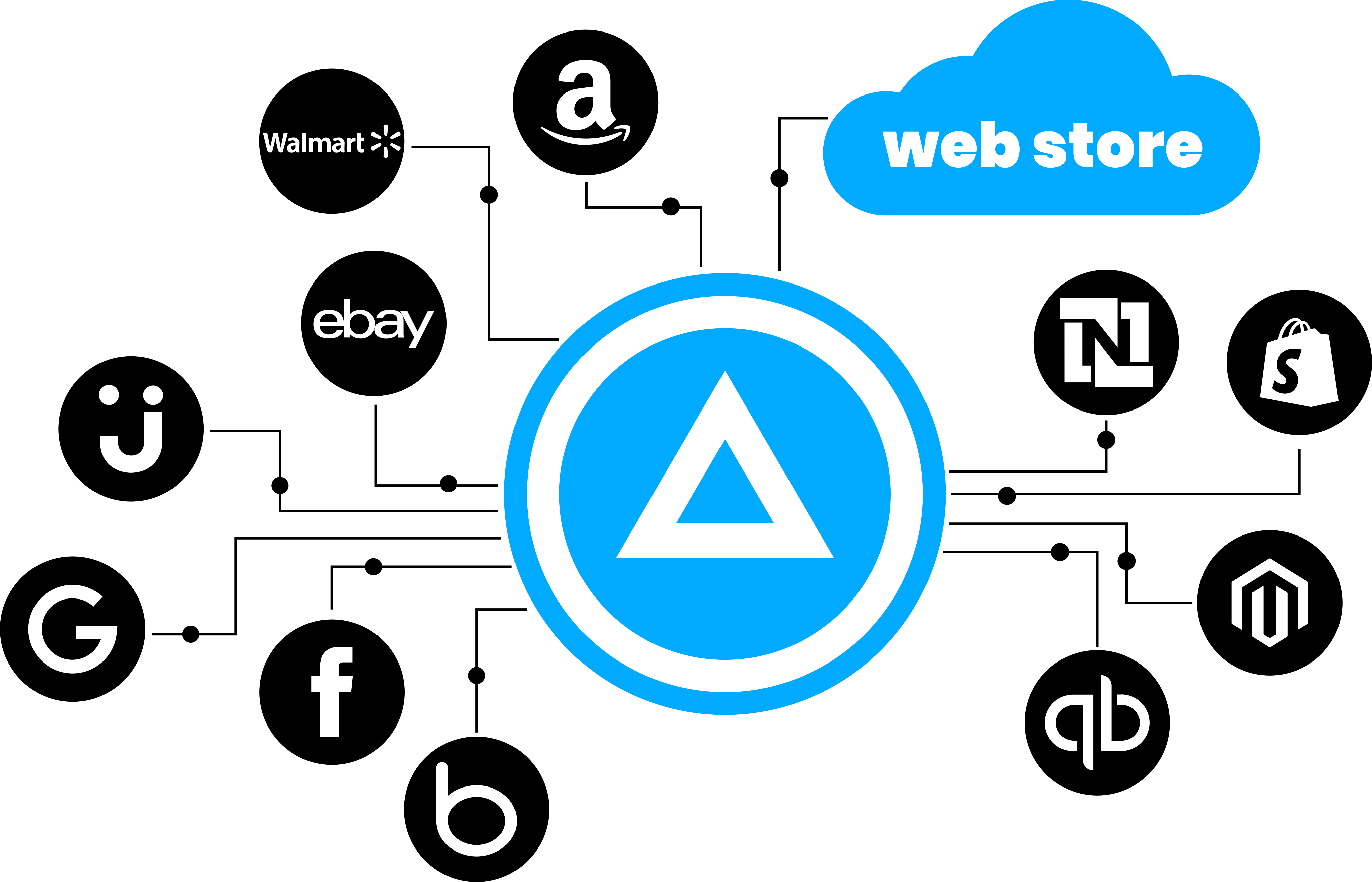
Acenda used its Product Information Management tools and marketplace operations experience to help turn the client’s wholesale catalog into a marketplace-ready product database. The goal was to create a structure that could support the first launch and also make future channel expansion easier to manage.
The Work
Acenda started by reviewing the client’s catalog, systems, and marketplace goals. The work included product data cleanup, marketplace field mapping, integration planning, and operational setup for order and inventory management.
Acenda’s team helped organize product data into a structure that could be used across several marketplaces. This included reviewing item titles, product descriptions, images, brand names, item identifiers, dimensions, pricing, categories, and channel-specific attributes.
The technology team also worked to connect data from separate order and inventory management systems. The client did not need to replace every existing system. Instead, Acenda helped connect the systems that were already part of the client’s business and standardize the data needed for marketplace selling.
This gave the client a more consistent process for sending product data to marketplaces, receiving orders, updating inventory, and returning tracking information. It also gave the client a clearer way to review marketplace feedback and address listing issues from one operating environment.
The Solution and Launch
Within about one month, the client was ready to begin selling on marketplaces such as Target+, Amazon, and Walmart. The launch was supported by catalog preparation, marketplace integrations, order flow testing, inventory sync, and listing review.
Acenda helped the client move from a wholesale catalog to a digital product catalog that could support direct-to-consumer marketplace sales. Product data was structured for each channel, marketplace requirements were reviewed, and listing issues were addressed as they came back from marketplace systems.
The client also worked with Acenda partner agencies on traffic and conversion support. This included paid search campaigns, product review syndication, and listing content optimization. These services helped the client improve product visibility and give shoppers more complete product information before purchase.
The client’s wholesale background created an advantage in marketplace selling. Because it already had supplier relationships, a broad catalog, and established fulfillment operations, the company could offer a wide range of products at competitive prices while continuing to use familiar business processes.
By 2022, the client had expanded its marketplace presence and was looking at growth beyond its core pet supply assortment. The program created a new revenue channel while allowing the company to keep its existing wholesale business in place.
Within six months, more than 25% of the client’s gross revenue was generated through marketplace sales. Most of that revenue was incremental, meaning it came from new online channels rather than replacing the client’s existing brick-and-mortar distribution business.
Summary
The pet products distributor used Acenda to build a marketplace program from an existing wholesale operation. The work included catalog cleanup, marketplace data mapping, system integrations, inventory sync, order flow, listing support, and channel expansion.
Today, the distributor sells as a third-party seller on several online marketplaces, including Target+, Amazon, Walmart, Overstock, Google Shopping Actions, Facebook Marketplace, eBay, and others.
The company grew its marketplace revenue into eight figures and now generates a large share of its annual revenue through online channels. The business did not abandon its wholesale roots. Instead, it added a direct-to-consumer marketplace model that works alongside its existing operations.
The project shows how a traditional distributor can use its existing product selection, vendor relationships, pricing structure, and fulfillment process to enter marketplace selling. With the right catalog structure and operating process, the client was able to manage more products, reach more shoppers, and create a new source of revenue.
